
Unfinished Stories: Claudette Goico Šernius Uses Art to Confront Human Trafficking in Pompano Beach
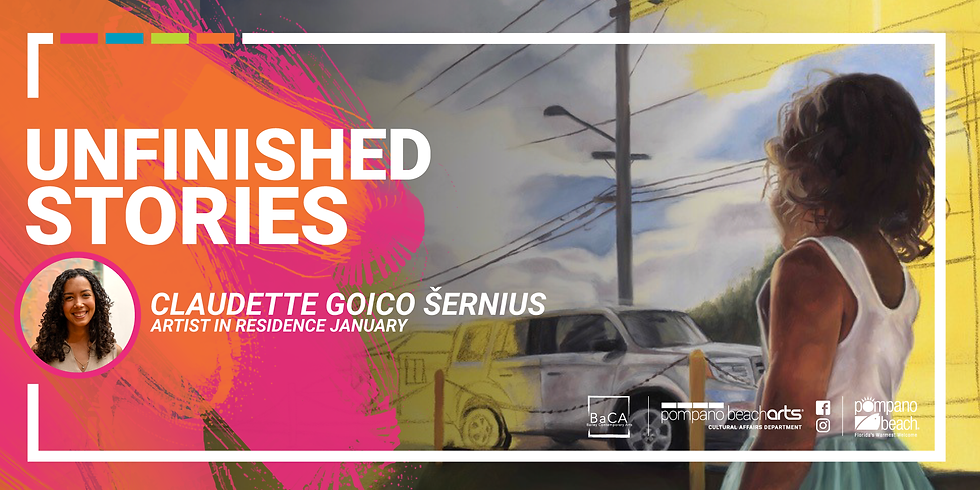
Human trafficking is often discussed as something distant, something that happens elsewhere. Unfinished Stories, a new exhibition by South Florida artist Claudette Goico Šernius, challenges that assumption head-on, using visual storytelling to confront a crisis happening within our own communities.
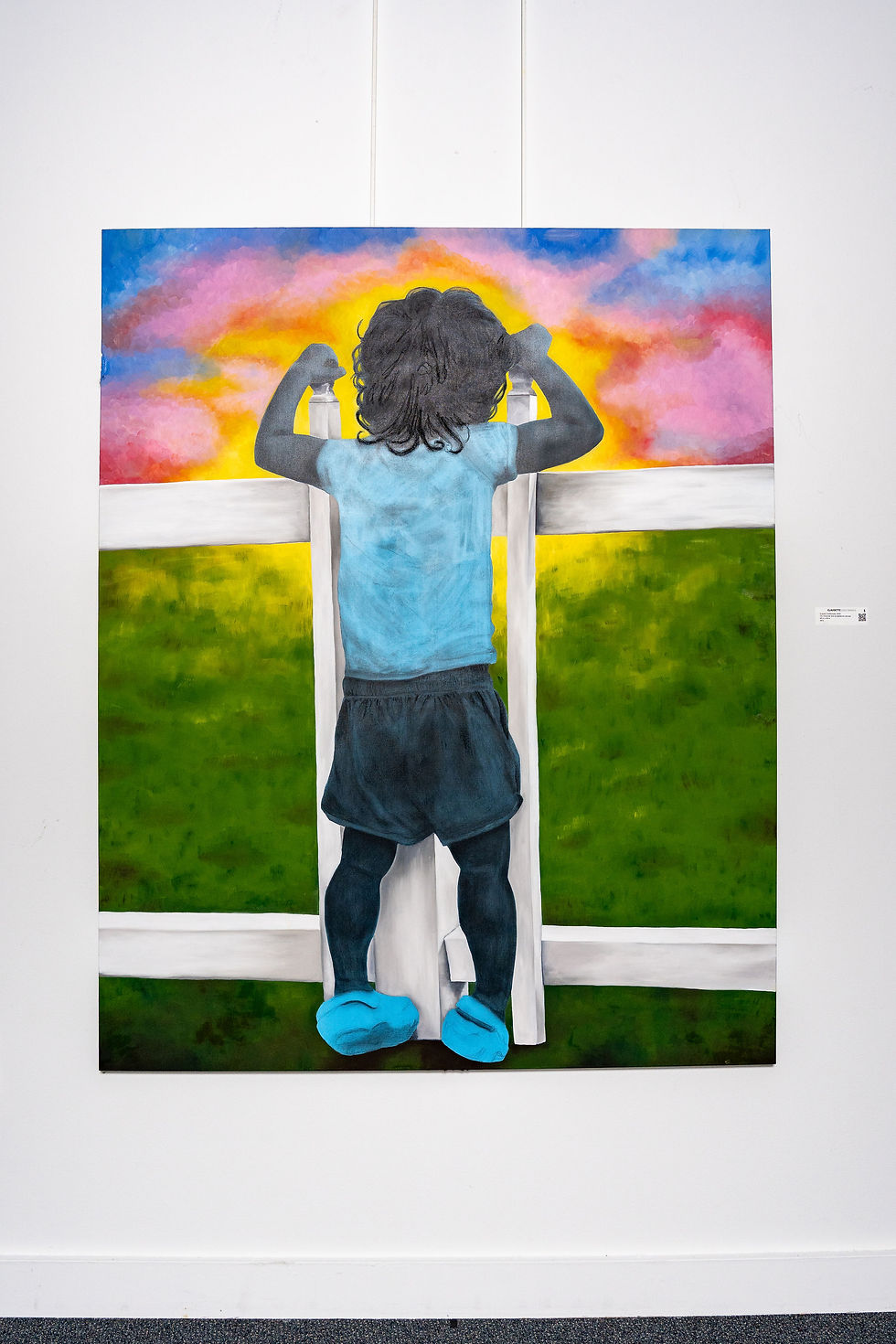
Currently on view as part of her artist-in-residence at Bailey Contemporary Arts in Pompano Beach, the exhibition presents a series of oil paintings centered on children, vulnerability, and the layered trauma carried by survivors. Through intentionally unfinished compositions, Šernius invites viewers to sit with discomfort, reflect on responsibility, and recognize their own role in protecting the most vulnerable.
The Moment That Sparked Unfinished Stories
The roots of Unfinished Stories trace back to a moment that deeply shifted Šernius’s perspective. While studying at Broward College, she participated in a professional enhancement program that partnered with local nonprofits addressing human trafficking.
During one event, a survivor shared her story publicly, revealing that she had been trafficked by her own family.
“That really impacted me,” Šernius shares. “I’ve always been really close to my family, and I could not fathom that being a reality for somebody else. I knew I needed to do something about it. This is how the Unfinished Stories series came to be.”
What began as a personal reckoning quickly evolved into a larger artistic mission, one grounded in awareness, advocacy, and community responsibility.
Why the Paintings Are Intentionally Unfinished
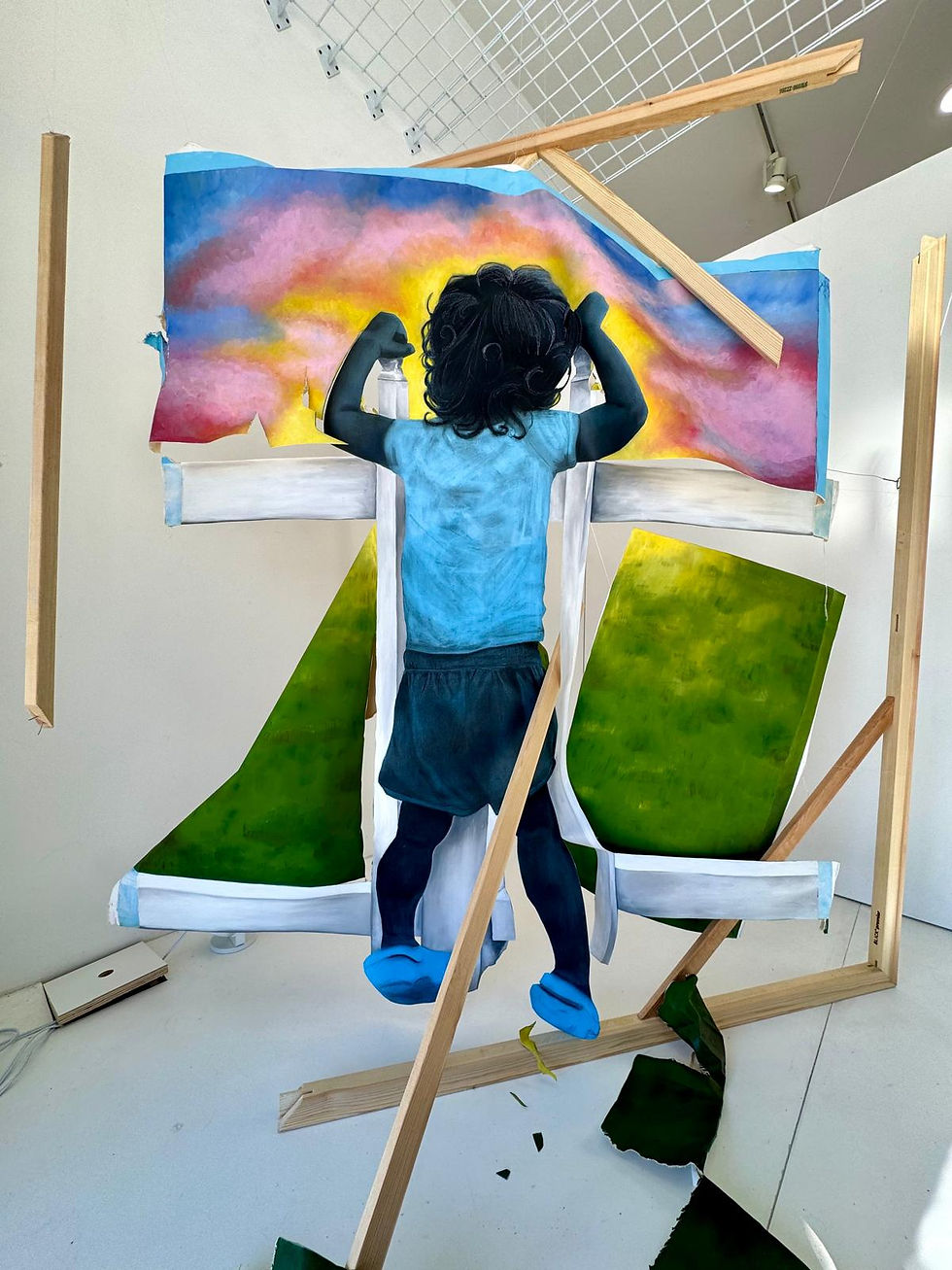
One of the most striking aspects of the exhibition is its visual language. The paintings are deliberately left unresolved, with layers of paint and charcoal visible beneath the surface.
“The paintings are intentionally unfinished as a visual representation of the layers of trauma survivors face after they are rescued,” Šernius explains.
“Survivors deal with physical, mental, and emotional traumas that are not always noticeable to the simple eye. They tend to be complex and abstract, and with the different layers of materials and brush strokes I attempt to exemplify that.”
The unfinished aesthetic becomes more than a stylistic choice. It functions as a metaphor for healing that is ongoing, nonlinear, and deeply personal.
Centering Children and Shared Responsibility
Children are the focal point of Unfinished Stories, representing innocence, vulnerability, and the urgent need for protection.
“I portrayed children because I consider them to be the most vulnerable in society, and us as adults are responsible to look after them,” Šernius says. She made the work even more personal by using reference images of children who are dear to her.
To protect their identities and broaden the emotional impact, the figures are depicted without visible faces.
“This allows any viewer to put any child that is dear to them in their shoes,” she explains. “This is a call to action to learn about the issue and understand that we can make a difference within our circle of influence.”
Rather than shock, the work relies on empathy, asking viewers to imagine responsibility not as abstract concern but as something deeply personal.

Art as Advocacy and Calling
Šernius’s practice spans painting, sculpture, and community engagement, but her relationship with art has evolved over time.
“Becoming an artist was not always fulfilling for me until I viewed it as something bigger than myself,” she shares. “I believe God gives us gifts to make an impact in this world, and it happens to be that mine is art.”
Using her work intentionally to empower, educate, and bring people together has reshaped her creative purpose. She sees Unfinished Stories as part of an expanding practice, one that will continue to explore new media and reach wider audiences while remaining rooted in impact.

The Role of Bailey Contemporary Arts and City Support
Support from local and county cultural institutions has played a crucial role in the reach and resonance of Unfinished Stories.
“South Florida ranks number one in the state of Florida for human trafficking, and Florida ranks top three in the nation,” Šernius notes. “I believe it is our duty to make sure we are protecting our community for it to grow healthy and flourish.”
At Bailey Contemporary Arts, she has been given the space and institutional backing to expand the series and deepen its community impact, reinforcing the importance of city-supported cultural spaces as platforms for critical dialogue.
What She Hopes Visitors Take With Them
Šernius hopes visitors leave the exhibition with a renewed awareness that this issue is local, urgent, and actionable.
“I want them to understand that this happens in our backyards, not overseas,” she says. “I want them to know they can make a difference, and it’s within their range of power. The smallest actions count. Let kids be kids.”
Rather than offering easy answers, Unfinished Stories leaves space for reflection, responsibility, and continued conversation.
Exhibition Details
Unfinished Stories by Claudette Goico Šernius
Bailey Contemporary Arts Center (BaCA)
Pompano Beach, Florida
January 2 through January 30, 2026
Learn more about Claudette Goico Šernius at claudettegsernius.com and follow her work on Instagram at @claudettegoicosernius.

About Choose954
Choose954 is a hyper-local cultural platform dedicated to spotlighting the artists, creatives, small businesses, and community-driven stories shaping Broward County and Greater Fort Lauderdale. We believe culture happens every day, not just during major events.
Know a story, exhibition, or event we should cover? Submit tips, follow along, and share local culture at choose954.com.


Comments